







Moonspell is a band that, throughout its almost 35 year spanning career, has always been guided by its own gut feeling. Which has resulted in a very diverse discography, without the Portuguese ever having sold their soul (except to the devil). From the brooding folk-black of Anno Satanæ, the epic, bombastic gothic metal of Memorial, and the symphonic grandeur of 1755 to the softer but atmospheric Hermitage: despite the enormous variety in approach and mood (which shifted in waves over the years), the essence of their style has always been preserved: a recognisable signature sound that is unique to the band Moonspell. Even during their more experimental period (Sin/Pecado, The Butterfly Effect), each song still carried the sultry, gothic character of their Mediterranean Southern Deathstyle.
Previous album, Hermitage, presented a Moonspell that did not necessarily need to impress or astonish, but dared to present itself in a very vulnerable manner and gave us a look deep into its soul. The album was much less grounded in thematic darkness and gloomy epicness, but surprised with rock, pop, and jazz influences. Moonspell‘s inner torment, in the past mainly channeled through ferocious intensity and monumental bombast, suddenly found a very different expression and was conveyed on the 2021 album without frills yet with a lot of feeling, and stemming from a kind of sincere, intrinsic fragility. The album did have its heavier moments (the title track for example), although these were scarcer and less obvious than before, and more often a certain hard rock or heavy metal feel was sought, but softer, slower atmospheres just as much. This resulted in a number of musical gems, such as All or Nothing, which, however, could not be called black metal, nor folk metal, not even gothic metal.
Bold choices then, but also a daring step forward for Moonspell. Hermitage was a down-to-earth, brutally honest record; not an easy release for the seasoned fan, but top-tier in quality. The production was handled by Jaime Gomez Arellano (Paradise Lost, Sólstafir, Ghost), who gave the album a very restrained sound. It wasn’t the first time Moonspell had challenged their fans, and anyone who approached this album with specific expectations (and in Moonspell’s case that is often referring to Wolfheart or Irreligious) was left disappointed. However, anyone who has recently attended a Moonspell show knows that this is not a band that can no longer deliver something hard or raw; the choices made for Hermitage were simply driven by gut feeling and the inspiration of the moment…
…And that moment clearly isn’t entirely over yet, as on the new album Moonspell initially continues in the same vein as on its predecessor. Far from God opens with Cross Your Heart, which was already released as a single in the month of May. It is immediately apparent that this track is stylistically very close to the music of Hermitage: mid-tempo, melodic rock with a heavily repeated, irresistibly catchy central guitar motif and a sultry groove. More hidden in the deeper layers you can still hear that heavier Moonspell sound, but it no longer plays a leading role. The soft, warm, clean vocals of Fernando Ribeiro fit the picture perfectly, but also remain a distinguishing mark and an anchor for the fanbase. No shouting, no growling, no wolf-like howls, only a very stripped-down, honest way of singing. The vocals and lyrics are clearly given a central role in Cross Your Heart. That characteristic, sultry, southern feel/sound returns here as well. There definitely is a certain sharpness and dynamism to be found in the melodic riffs emerging from Ricardo Amorim’s guitar work, but there is no trace of aggression or real “heaviness” here. Jaime Gomez Arellano continues the line of restraint and simplicity that defines this music, just as on Hermitage, fully into the production. As Fernando Ribeiro himself already stated: “This is a very simple, easy-listening gothic album with many rock influences.” You will not find metal on Cross Your Heart, but the track does rely on a beautiful build-up, a well-developed layering of guitars, subtle synth touches (adding a sense of space and dreaminess), and a very atmospheric and slightly epic spoken-word section. And an ending explosion that feels somewhat “out of place”.
The way these themes are presented brings us back to Sin/Pecado, Darkness and Hope, Memorial, and The Antidote; albums that blended sultry, brooding gothic atmospheres with perfectly timed eruptions of pent-up fury. And this is exactly what the initially very calm, intimate Biblical delivers. The song builds from deep, crunchy bass lines, warm leads, prominent synths, and almost whisper-like vocals, and once again relies on a compelling central chorus. On this album Moonspell proves that they still master the art of songwriting like no other. The lead guitar is given plenty of space to shine, with deliciously melodic outbursts and a rich, full sound. Throughout the build-up there is, however, a very clearly felt restraint in the music: the harbinger of an eruption in which Fernando Ribeiro unleashes his inner wolf once more, accompanied by a solo to die for. Because Biblical is so captivating, and even though it runs close to five minutes, the end of the song leaves you with the feeling that it could, should, have gone on a bit longer. Moonspell keeps the listener hungry for more.
From the impassioned fervour and unfiltered aggression of The Great Wolf in the Sky, Far from God then flows into gentler, more atmospheric waters and more sacred atmospheres with the beautiful Your Promise of Light, which regularly evokes a Paradise Lost feeling, and the moving For the Love of Mortals. Your Promise of Light is a promise of beauty, delivered with a great deal of feeling, but it also maintains a constant suspense and definitely has its heavier moments. For the Love of Mortals is by far the most contemplative track on the album. A powerful and beautiful, deeply thoughtful song that not only fully captivates, but also serves as a counterbalance to what follows. Because…
Far from God is an album that evolves and surprises. Anyone who only heard the first two singles will draw the wrong conclusion, because this record still has a few surprises in store and the sting really is in the tail this time.
Our Freedom to Fall is completely infused with the heavy gothic doom metal vibes of Paradise Lost and Type O Negative (and obvious Tiamat influences), and that is quite a surprise at the end of this already very diverse album. The more the song develops, the more Moonspell leaves behind these gothic doom icons to tread an even darker and more brutal (black metal) path. Especially when the guitars suddenly plunge into the depths with enormous dissonance, the drums destroy everything with crushing kicks, and Ribeiro joins in with his most monstrous vocals since Wolves from the Fog, you can only be completely stunned. Seriously, Moonspell has not sounded this heavy since… Memorial? Anno Satanæ? Ever?
Anyone who claimed after Hermitage that Moonspell would never rediscover its heavy roots is hereby thoroughly silenced. The way Far from God unfolds is at the very least remarkable. The album starts with two tracks clearly bearing the Hermitage stamp, followed by a number of songs that lean more towards The Antidote and Darkness and Hope and two softer but enchanting tracks with enormous depth, before ending with two heavy hitters. And yet the closing Reconquista is nothing like Our Freedom to Fall: no doom metal influences, but rather a melodic, monumental gothic/heavy metal approach in which the powerful drums, the virile guitar sound, and the harsh, raw, half-chanting vocals stand out. Just like Our Freedom to Fall, Reconquista features a (admittedly shorter) moment of dark constriction that will give the listener goosebumps (and briefly brings me back to Under the Moonspell).
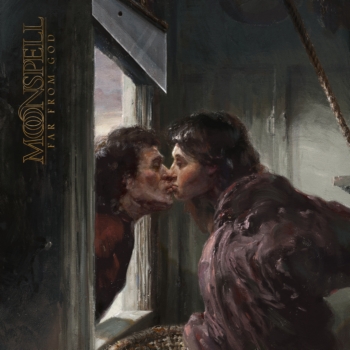
Reconquista is a wonderful closer to an enormously diverse and, for various reasons, quite iconic album that seems to draw on influences from every era of Moonspell’s discography. For that reason, Far from God is not only very solid and very musical, but also very complete, in the sense that it perfectly embodies the essence of Moonspell without remaining stuck in the past. The album was announced as “the Irreligious of the 21st century”, but I do not fully agree with that statement, as it connects more to other Moonspell albums than to Irreligious. On Far from God, Moonspell combines its classic Southern Deathstyle with the Southern Gothstyle of Hermitage in a convincing mix of styles. Far from God is absolutely not far from Moonspell—quite the contrary.
Score:
90/100
Label:
Napalm Records, 2026
Tracklisting:
- Cross Your Heart
- Far From God
- Biblical
- The Great Wolf in the Sky
- Your Promise of Light
- For the Love of Mortals
- Our Freedom to Fall
- Reconquista
Line-up:
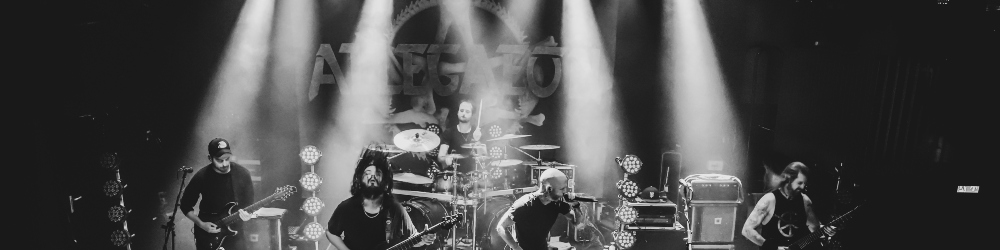
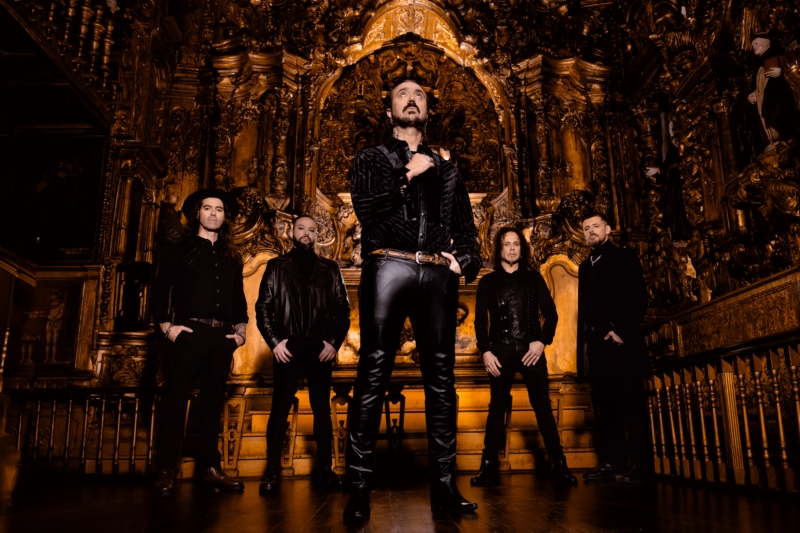
- Fernando Ribeiro – Vocals
- Ricardo Amorim – Guitar
- Pedro Paixão – Keyboards
- Aires Pereira – Bass guitar
- Hugo Ribeiro – Drums
Links: