



Number twelve already for the metal outfit from Richmond. By now, Lamb of God has become a reliable band when it comes to high-quality groove metal. And although the glory days of classics like As The Palaces Burn, Ashes of the Wake and Sacrament are behind us (and them), the band still delivers solid records. The same goes for Into Oblivion, which contains ten tracks that fully align with the expectations built up over the years. Cynics might call it self-plagiarism, but the band has simply mastered the mix of groove and thrash metal so well that it deserves recognition for its own sound. You shouldn’t expect too many surprises, but they are there. Sometimes it’s a guest musician, other times it’s subtle influences woven into the music.
For instance, Sepsis is adorned with some heavy sludge riffs, and at times the band seems to hark back to older material. The break in (the otherwise somewhat anonymous-sounding) Killing the Floor resembles the break in Ruin. That means particularly vicious. And that’s exactly how I prefer my Lamb of God: the feeling that you could be grabbed and torn apart at any moment.
Those moments appear slightly more often on this record than on Omens or the self-titled album. The ferocious thrash influences at the start of Parasocial Christ are certainly noteworthy in that regard. Blunt Force Blues also features a pretty heavy break, with the band weaving interesting guitar lines around it, something you hear more frequently throughout the album. Overall, I think the guitar work and especially the songwriting stand out strongly. This is mainly due to the accents given to the songs. Sometimes it’s an almost dissonant part, other times a line that cuts straight through the groove. It keeps the whole thing feeling fresh.
One area where Lamb of God has always excelled is opening tracks. On almost every album, the first song is often one of the strongest. Here too, Into Oblivion bursts out of the gates. The track immediately showcases the strength of (modern) Lamb of God, with grooving riffs and a build-up toward the chorus that sounds massive through the speakers, partly thanks to the guitar work of Chris Adler. It’s an immediate highlight. And while you can’t say the band has blown all its powder right away, the tracks that follow don’t all reach this same level.
One of Lamb of God’s greatest strengths has always been the unbridled commitment of Randy Blythe. His vocals can easily be considered an extra instrument. On the earlier albums, this was a huge addition, elevating the songs to greater heights. On this record, he once again conjures up some powerful vocal lines and also sounds a bit angrier. What I could do without, however, is the clean singing in El Vacio. He’s simply not a strong clean vocalist. You can layer the vocal lines as much as you want, but it still sounds shaky. Moreover, he adds far more emotion and melody in the screamed chorus than in the clean vocal sections. The track undoubtedly serves as a breather, but I don’t need a breather on a Lamb of God album. It barely runs forty minutes, why would I want a moment of rest? The band would have been better off putting more thought into the second half of the album, which here and there features filler and predictable ideas. Tracks like Bully, A Thousand Years, and closing track Devise/Destroy sound solid, but never really bring a smile to your face.
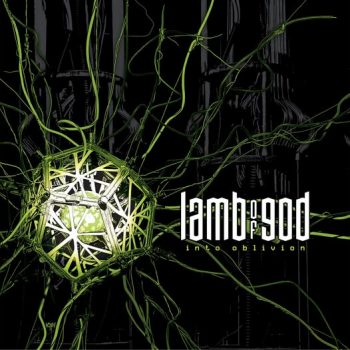
All in all, Into Oblivion is an album that can be placed somewhere between Sturm und Drang and Wrath. While there are still quite a few safe passages, the overall sound is a bit more aggressive and the songs are approached in a slightly more interesting way than on previous records. With Into Oblivion, Lamb of God proves that they are still capable of delivering a solid album that fans of the band will undoubtedly receive with appreciation.
Score:
80/100
Label:
Epic Records, 2026
Tracklisting:
- Into Oblivion
- Parasocial Christ
- Sepsis
- The Killing Floor
- El Vacio
- St. Catherine’s Wheel
- Blunt Force Blues
- Bully
- A Thousand Years
- Devise / Destroy
Line-up:
- Randy Blythe – Vocals
- Mark Morton – Guitar
- Willie Adler – Guitar
- John Campbell – Bass guitar
- Art Cruz – Drums
Links: