









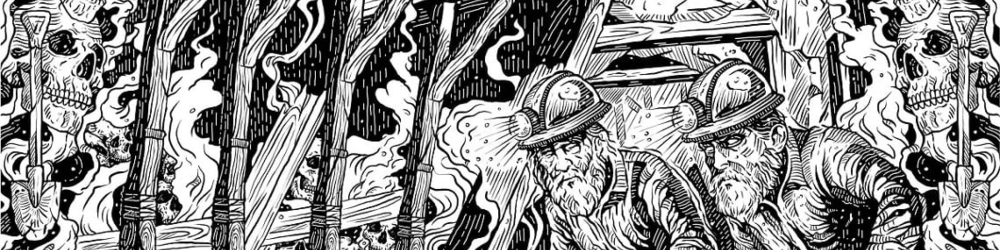


1914 is a blackened death/doom metal band from Lviv, Ukraine. Their albums consist of detailed historical narratives about events from the First World War, crafted with meticulous precision and vivid storytelling. Using an arsenal of samples — including authentic recordings, speeches, and music from that era — the band creates an atmosphere that immerses the listener deeply into the harrowing reality of the Great War. But it’s not only the level of detail and historical accuracy that impresses: the brutal combination of black, death, and doom metal shapes a dark, oppressive, and melancholic soundscape. The albums draw you into an overwhelming, crushing experience that vividly portrays the grimness of World War I.
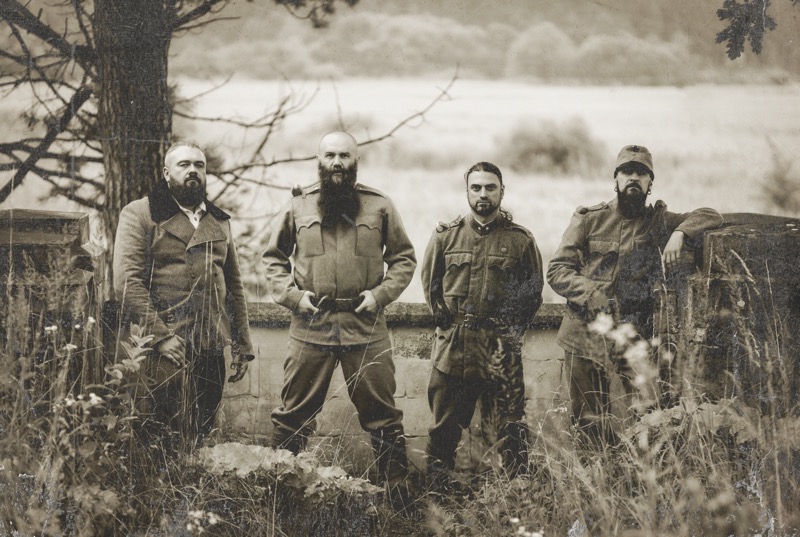
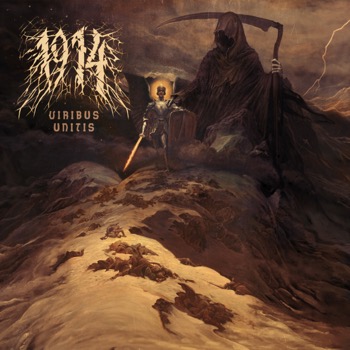
On the new album, the First World War once again takes center stage. This time, the story is told from an Austro-Hungarian perspective. Viribus Unitis follows the life and military courage of a soldier from Lviv (Ukraine), which at that time was part of the Austro-Hungarian Empire. It’s a story about the heat of battle, the strength of camaraderie, the realization and acceptance of harsh realities, and about changing perceptions. A story about fear, death, loneliness, pain, and loss — but also about an unbreakable will to live and to find hope amid a terrifying and bloody war. Not coincidentally, a situation in which the band — and indeed all of Ukraine — currently finds itself? The attentive listener will undoubtedly recognize numerous references to the present day: sometimes subtly woven in, sometimes rendered with great force.
Just like on The Blind Leading The Blind (2018) and Where Fear And Weapons Meet (2021), relentless, blackened tremolos, menacing, crushing death metal riffs, and fiercely galloping drums paint a foreboding musical landscape on Viribus Unitis. Not a green landscape under a warm, radiant sun with colorful flowers, fresh grass, and a peaceful brook babbling through it, but a desolate plain of frozen, icy mud under a leaden sky, with a bitter wind sweeping across it. Tracks like 1915 (Easter Battle for the Zwinin Ridge) (featuring a merciless, telling rasp of disgust over God Save The Tsar, the national anthem of the Russian Empire from 1833 to 1917), 1916 (The Südtirol Offensive), and 1917 (The Isonzo Front) are fast, determined, and raw. Melodic leads, orchestral layers, and clean vocals not only broaden the dynamic range but also provide a sharp contrast to the crushing weight of the riffs. The fury and madness of war resound through them in a powerful and striking way.
Halfway through the album, both the story and the musical expression take a clear turn. In 1918 Pt 1: WIA (Wounded in Action), 1918 Pt 2: POW (Prisoner of War), and 1918 Pt 3: ADE (A Duty to Escape), the tempo slows down, repetitive rhythms take over, and the once fierce, defiant vocals give way to a heavier, more restrained delivery. The result is a suffocating atmosphere of fear and despair, vividly conveying the inner struggle and emotional toll of war.
It’s the moment when the protagonist, completely overcome by war fatigue, is wounded, captured, gradually comes to new realizations, and escapes. In a gripping, moving way, the band draws you into the protagonist’s experiences. The doubt and despair with which “The only hope that I care is to meet my daughter and wife” and “My whole life I’ve been blind, tried to survive in the shade of Empire” are delivered in 1918 Pt 3: ADE (A Duty to Escape) are deeply stirring and immersive. The sorrow expressed in the guest contribution from Aaron Stainthorpe (ex-My Dying Bride, High Parasite) elevates this subdued lament on loss and brotherhood amid war to haunting emotional heights.
The following track, 1919 (The Home Where I Died), paints the album’s closing chapter in even darker and more emotional tones. Carried by piano and military-style drum patterns, the protagonist tells a story that seems to have no end. The spoken passage “While I was a prisoner, the Poles captured Lviv. Now the Bolsheviks are trying to take Kyiv. The war is on again, it never ends. I met my brothers-in-arms who are leaving Vienna to stand up for battle in the ranks of the Ukrainian Galician Army, to finally gain freedom for our country, for our future, for our children” together with lines like “I’m going back to Ukraine” and “Embrace those who love you until the end. Hold them close, don’t let them go,” forms a breathtaking, emotional continuation of the protagonist’s story, yet one that is also hard to separate from the current situation in Ukraine.
To lend even more power to Viribus Unitis’ merciless finale, 1914 closes with War Out (The End?) — revealed to be the first historical recording ever made of the Ukrainian national anthem. As the final notes fade away and silence falls, the words “The war that never ends” still echo long after. Moving, intense, impressive, and enough to leave you utterly speechless.
Curious about the stories behind the songs? In the coming weeks, the band will take you on Zware Metalen on an even more detailed historical journey, shedding light on the stories behind each track.
Viribus Unitis is an album that leaves an profound impression not only through its musical intensity and uncompromising heaviness, but also through its lyrical depth. The carefully crafted historical storytelling hits with emotional force, making it both mercilessly heavy and overwhelming. “Their most dynamic and emotionally captivating album to date,” states the biography from the promo. A statement I can fully endorse.
Score:
92/100
Label:
Napalm Records, 2025
Tracklisting:
- War In (The Beginning of the Fall)
- 1914 (The Siege of Przemyśl)
- 1915 (Easter Battle for the Zwinin Ridge)
- 1916 (The Südtirol Offensive)
- 1917 (The Isonzo Front)
- 1918 Pt 1: WIA (Wounded in Action)
- 1918 Pt 2: POW (Prisoner of War) (feat. Christopher Scott)
- 1918 Pt 3: ADE (A Duty to Escape) (feat. Aaron Stainthorpe)
- 1919 (The Home Where I Died) (feat. Jerome Reuter)
- War Out (The End?)
Line-up:
- K.K. LIR. Lemberg Nr.19 Fähnrich, Rostislaw Potoplacht – Drums
- k.u.k. Galizisches IR Nr.15, Gefreiter, Ditmar Kumarberg – Vocals
- K.K. LIR Czernowitz Nr.22 Oberleutnant, Witaly Wyhovsky – Guitar
- K.K. LIR Stanislau Nr.20 Zugsführer, Oleksa Fisiuk – Guitar
- k.u.k. Galizisch-Bukowina’sches IR Nr.24, Feldwebel, Armen Howhannisjan – Bass guitar
Links: