





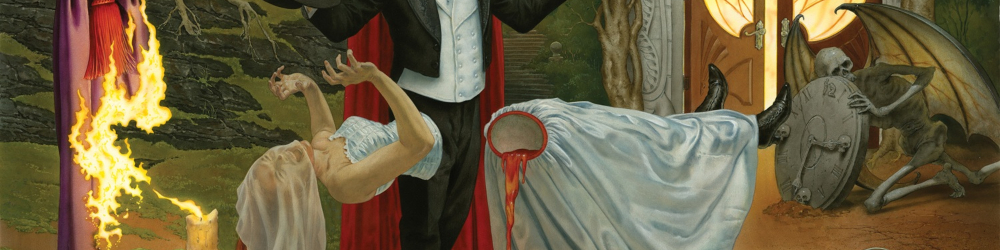
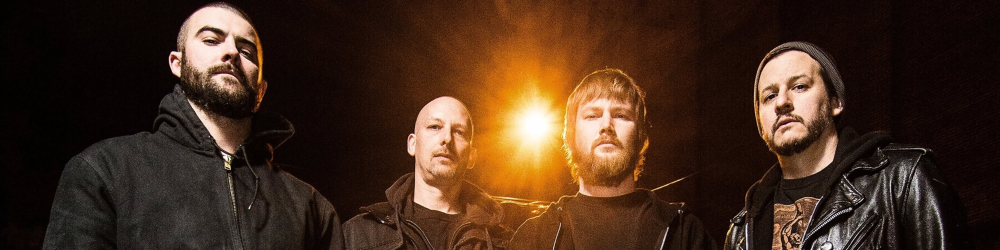

In the introduction to his review of the new Biohazard album, Remco made the sharp observation that metal fans, rejoicing over a comeback, sometimes seem to forget that the last albums released before “the split” weren’t all that great to begin with. That, however, doesn’t apply to Coroner, whose albums have consistently been of a high standard. Then again, the last record they released before laying the band to rest in 1996 – quite in line with their name – wasn’t universally appreciated either. So maybe Remco does have a bit of a point here… But that point is quickly dismissed by the stunning quality of Dissonance Theory, the first record since the band was resurrected in 2010. Let’s get straight to the point: Dissonance Theory is at least as good as, and in some ways even better than, anything these Swiss masters have released before.
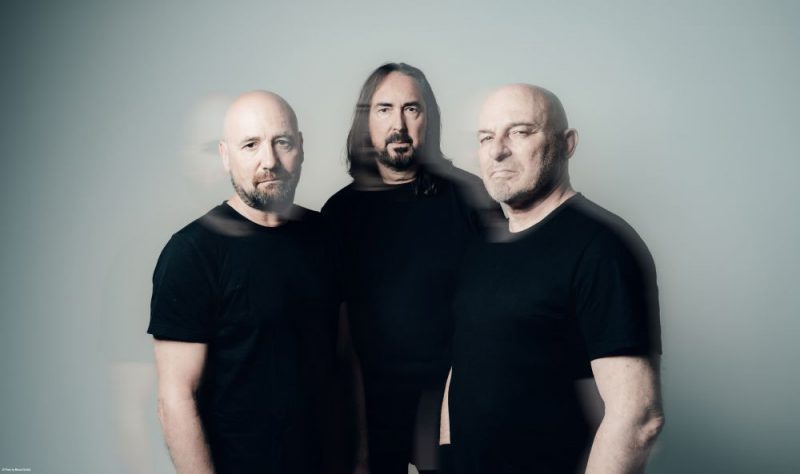
And that says a lot. Let’s dive into history for a moment (pull your chair closer, because grandpa’s about to tell a story). The band was formed back in 1983, but of the five-man lineup (!) that recorded the Depth of Hell demo that year, – in almost Napalm Death-like fashion – only drummer Marquis Marky is still in the band three years later. He left the band four years after their 2010 reunion, which now makes the Napalm Death comparison (no original members left) entirely accurate.
I’ve never had the chance to hear that first demo, but with song titles like Damned Fool and Hey Rock’n Roller, it’s safe to assume we weren’t dealing with high-end tech-thrash yet. After several people leaving the band, guitarist Tommy T. Baron (Tommy Vetterli) and bassist Ron Royce (Ron Broder – surely you didn’t think that was his real name?) joined the ranks, and by 1986 things had taken a darker turn on the Death Cult demo. After a seemingly ordinary riff reminiscent of Metallica’s Kill ‘Em All, the tempo shifts start tumbling over one another, while Celtic Frost mastermind Tom G. Warrior growls the lyrics through your speakers in his unmistakable style (ooh!).
Tom G. Warrior? Indeed – the man produced the demo and took care of the vocals himself. Although the band would push its sound even further later on, the foundation for their future was firmly laid here, not least because the gruff, spoken-growl vocals Ron Royce would bring on later recordings – while less distinctive – don’t differ that much from Warrior’s. You can check that for yourself, by the way, since one of the versions of Dissonance Theory comes with the Death Cult demo as a bonus CD. A true collector’s item (I might just go pick it up this afternoon)!
Despite the short time span, the band managed to intensify and refine its technical thrash sound across these records, culminating logically in No More Color, which also made a big (and much-needed) leap in production. You’ve got to love how that Slayer-like riff in Die By My Hand bursts out of the speakers – all over those jittery drum patterns, of course.
In May 1990, the band performed alongside labelmates Sabbat, Tankard, and Kreator at what some consider the completely milked-out Noise Records thrash festival in the Werner-Seelenbinder-Halle. The label released multiple live and video editions of the event, touted as the first of its kind in the (former) Eastern Bloc. The upside was that Coroner gained plenty of extra exposure – even in VARA’s Vuurwerk – though they also seemed to be slightly overshadowed by the other three acts, at least two of whom had a more immediately accessible sound.
Not a real problem, though, because in 1991 Coroner released yet another powerhouse: Mental Vortex, an album on which the band struck a near-perfect balance between technique, alienation, vocal strength, and songwriting (Son of Lilith). It proved to be a (so far?) high point in the career of these Swiss professors, because on the follow-up – the aforementioned Grin – the sound shifted toward slower tempos and more groove and swing. At times, the album even carries a rock ’n’ roll vibe! Not a bad record, but it feels slightly out of place next to its predecessors (though perhaps less so compared to the prevailing winds in thrashland at the time).
Then things went silent on the recording front. A silence that lasted no less than 32 years – now brutally shattered by Dissonance Theory. Brutally, because Coroner sound far more energetic and inspired here than they did on Grin. In that sense, the new record connects more naturally with Mental Vortex and its historical predecessors. At the same time, the band clearly understands that the 1990s are long gone, as they push their sound even further – not just through superb production, but also by relying less on frenzied tempo shifts to achieve that trademark sense of alienation. That same sense of wonder is now (also) fueled by hypnotic, almost atonal passages and otherworldly elements. Vetterli explains that “new” drummer Diego Rapacchietti (who joined in 2014) brought a level of technical precision and musicality that opened up entirely new dimensions in songwriting. And for once, those aren’t empty words.
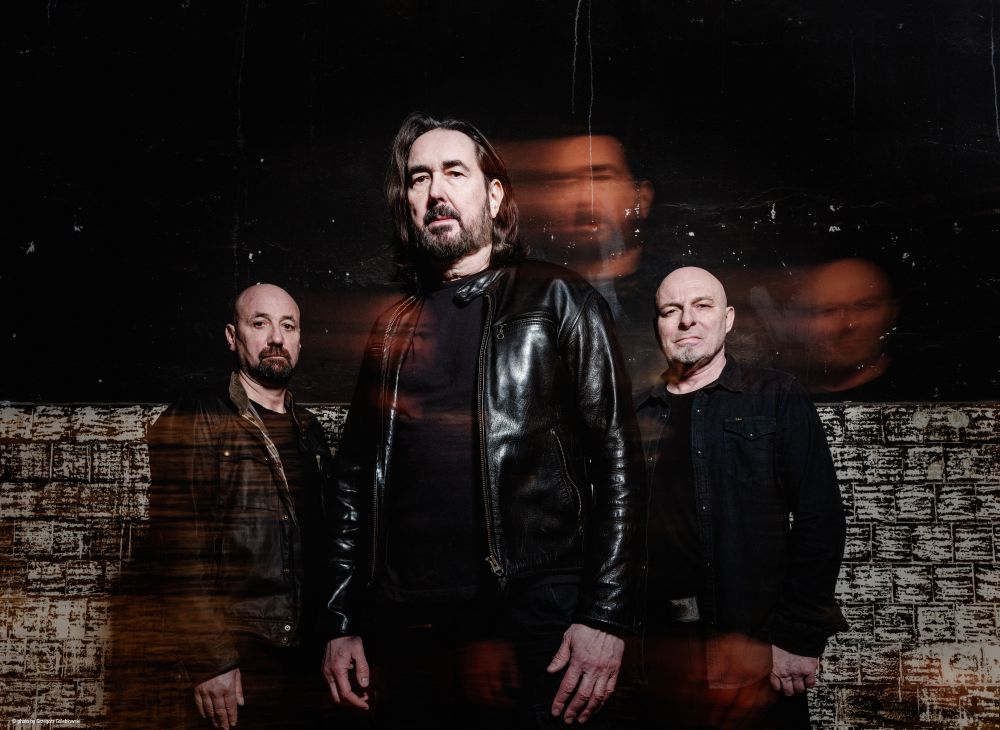
With Consequence, we still find ourselves close to the wondrous world of Mental Vortex. Crawling leads grip and drag each other through sonic space, followed by a heavy power riff that gives the band a depth we hadn’t always heard before. The excellent production and mix (the latter by Jens Bogren) certainly help, but it truly feels as if Coroner have added an extra layer to their sound. That same feeling arises in the highly atmospheric passages as well. The press bio ties these to Grin, but they work far better here. The band simply succeeds much more convincingly in giving sound to the loneliness of the future (Default…). Oh, and rage too, in the seething scream of So fun, so fun. In the press notes, Vetterli says he didn’t want to overthink things, and that in itself seems to have added yet another layer – this time one of emotion. No small feat in the often cold genre of technical thrash. The technical side, by the way, is far from forgotten, as shown in the fast, uplifting guitar solo and the twisting, writhing riffs that drive the song toward another crushing breakdown.
In Sacrificial Lamb, Rapacchietti lays down bouncing, mechanical rhythms over which the guitars soar high, while Broder spits his cynicism about religion into the mic: You’d have to be a moron not to see it, or a fanatic / I’m as much an enemy of humanity as any. Strange, then, that Vetterli’s solo sounds so heavenly. Perhaps the idea is that this brief moment of bliss is then obliterated by the hammering, repetitive riff that follows. Crisium Bound is another rythmic festival, this time laced with short, mathematically precise guitar figures. The middle section, however, allows room to breathe: softly struck guitar strings and a flowing bassline almost lift the weight of the world off your shoulders. No yoga required here! That is, until Broder’s furious voice piles the stress back on, ending the track like the sound of a collapsing star: I become fire!
I already mentioned Vetterli’s (also ex-Kreator) solo’s. He himself is most proud of his guitarwork in Symmetry and Trinity. The former sees the tempo pick up. With its driving drums and dragging riff, the song immediately grabs the ear (by Coroner standards, anyway). And that solo? It flows beautifully over the dark, thundering undercurrent. Trinity also features one of those dragging riffs, but it’s the gracefully ascending leads and spatial keyboards that guide the listener effortlessly through the rhythmic maze. Vetterli says the solo he plays here would’ve been impossible for him to play thirty years ago. That likely has to do with freedom (as opposed to overthinking), since he launches it like a Massacre-style dive-bomb and then gradually builds it up, note by note, adding more and more feeling.
Transparent Eye opens with notes that sound familiar – I can’t quite put my finger on it, though the name Anthrax keeps popping up – but then takes a sharp turn toward short, staccato chords that bounce around the room, occasionally heavily distorted (or completely mangled, if you prefer). These passages alternate with moments of lightness and playfulness, but fear and destruction prevail, also through the background keys (or is it guitar?) that wail like a constant scream. Despite what Vetterli himself might think, to me this is where he delivers the most beautiful sequence of notes on the entire record – cementing the track’s spot among the album’s highlights.
Dare I say it? I’ll just go ahead. Dissonance Theory is a phenomenal record – one that can stand proudly alongside Tempo of the Damned (Exodus) and Monotheist (Celtic Frost), which for me are the greatest comeback albums of all time. What a return, what a record!

Score:
90/100
Label:
Century Media Records, 2025
Tracklisting:
- Oxymoron
- Consequence
- Sacrificial Lamb
- Crisium Bound
- Symmetry
- The Law
- Transparent Eye
- Trinity
- Renewal
- Prolonging
Line-up:
- Tommy Vetterli – Guitar
- Ron Broder – Bass guitar, vocals
- Diego Rapacchietti – Drums
Links: