




It is said that hell smells of sulphur. Is that true? Because no matter how hard you try to sniff sulphur or inhale the slightest hint of its odour, you will not succeed. The smell of sulphur is not perceptible to the nose; sulphur is odourless! Yet the association between the underworld and this fragile, highly flammable substance is not bizarre or curious. In order to be able to smell sulphur, it has to form a compound. When the non-metal, with a bright yellow colour and the symbol S in the chemical periodic table, forms that compound, you are immediately hit hard. A sharp, penetrating smell hits you. Garlic, sprouts, onions? They all contain sulphur, which has formed a compound with another substance. And no matter how innocent the compound ( its official name: hydrogen sulphide) may sound, it is nothing more than what is colloquially known as a sewer or rotten egg smell. Sounds like a fitting scent for the pool of eternal damnation, doesn’t it?
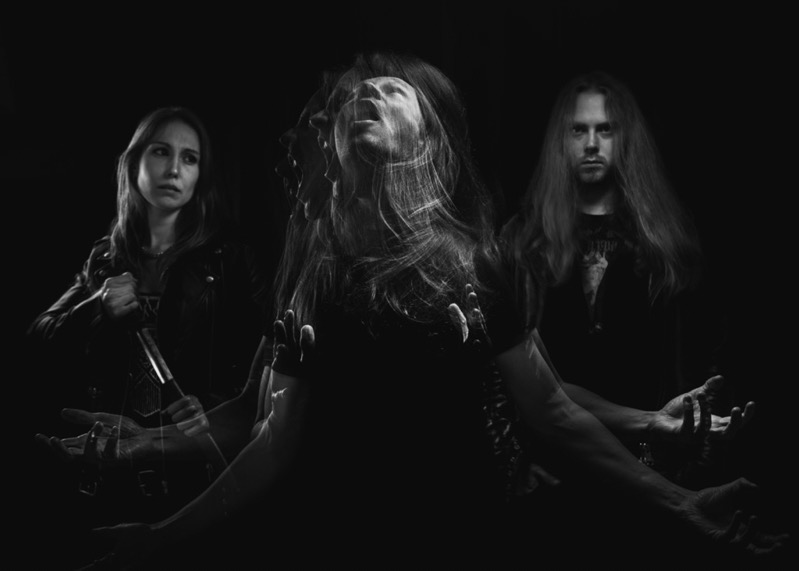
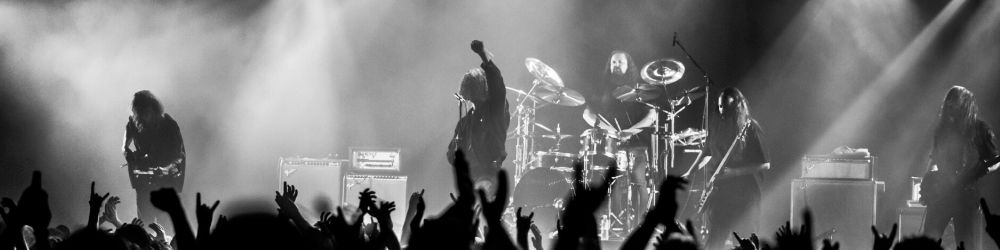
The Brussels (Belgium) trio of Solfatare has chosen a band name that also has the necessary associations with sulphur. A solfatare is after all a hot spring with sulphurous vapours or gases, but also the name of a volcano in Italy, which the ancient Romans believed to be a mythological entrance to the underworld. Recent volcanic activity in this area, which has been dormant for centuries, has caused concern, as a possible eruption could plunge the whole of Europe into darkness and desolation. And what is released when a volcano erupts and has a devastating effect on its surroundings? Lava, ash, debris and gases (including the poisonous sulphur dioxide and hydrogen sulphide).
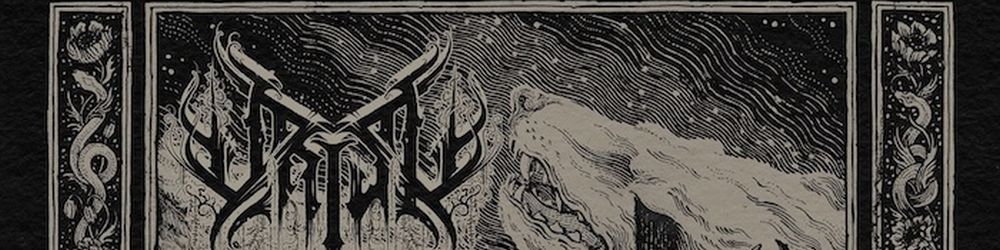
The eruption of the Thera on Santorini in the sixteenth century, that of the Tambora on the Indonesian island of Sumbawa (1815), the Krakatua in Indonesia (1883) and that of the Pinatubo on the Philippine island of Luzon (1991) are among the largest volcanic eruptions ever. Not the largest, but perhaps the most famous is that of the Vesuvius in Italy (in 79), which destroyed the Roman cities of Pompeii, Herculaneum and other places. Just as the Vesuvius buried the city of Pompeii under a meter-thick layer of volcanic ash and debris, the Brussels trio of Solfatare drapes you under a dark warmth full of poignant and deep-rooted inner turmoil on their debut album Asservis Par L’Espoir. While the first fifty seconds of the opening track Des Monarques Anhédoniques are somewhat secretly greeted by mystical lisping with some background noise and a misty keyboard, the whirlpool really starts to bubble and the fury lashes out wildly.
The trio clearly draws its musical influence from traditional black metal, but also has a slightly avant-garde slant. Songs like D’Hommes et d’Isoptères, Du deuil affaire and Quand ton cerveau te surine le crane contain tormented riffs, dark tremolos, biting blast beats, a fast tempo, biting dissonance and intoxicating melodies. The songs are usually played at a fairly high speed, but the album is so much more than just bloodcurdling rage. It is never a matter of just thundering on the basis of scorching blast parts, biting leads or ominous riffs. For example, Du deuil affaire and Sous des Cieux absents have a moment when the grimness disappears for a while and there is, if only for a moment, space and time for melancholic moods. The band takes the time to describe their stories. Only Ozymandias lasts just over five minutes, the other tracks all clock in at around seven minutes, with the closing track even exceeding that by a good margin.
Macabre doom and gloom, unrelenting, cruel grimness and rousing energy. Solfatare’s Asservis Par L’Espoir may leave little to no room for hope, enlightenment or even encouragement, but it does so in an imposing, powerful and moving way. Or, to turn to French again (in this case, some youth slang): Asservis Par L’Espoir … c’est mortel, c’est lourd! (It’s deadly beautiful, super cool!).

Score:
86/100
Label:
Signal Rex, 2025
Tracklisting:
- Des monarques anhédoniques
- D’Hommes et d’Isoptères
- Du deuil affairé
- Ozymandias
- Sous des Cieux absents
- Quand ton cerveau te surine le crâne
Line-up:
- N.C.P.M. – Bass guitar
- T.G.T.H. – Drums
- T.S.G.H. – Guitar, vocals
Links: