

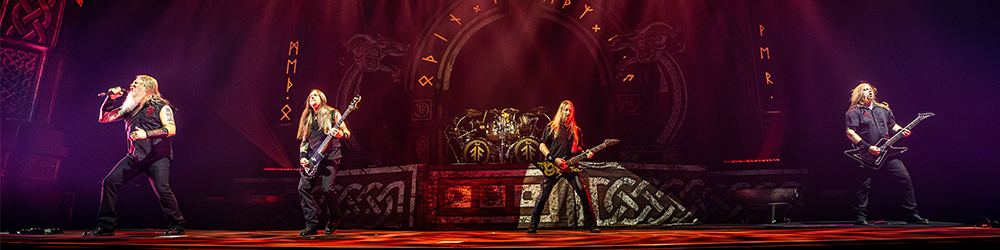


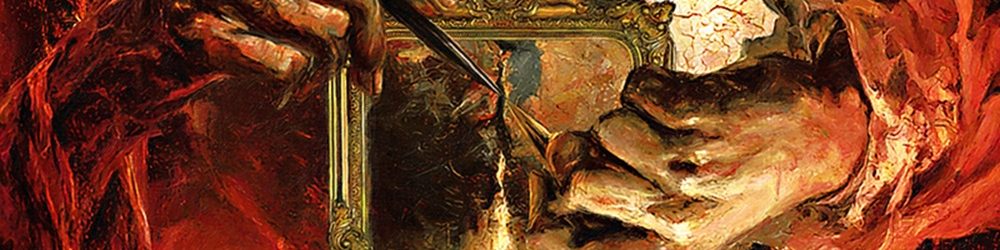
After 25 years, you might think Cult of Luna have already said everything there is to say. Yet on their tenth studio album, the Swedish post-metal giants prove that there are still unexplored paths within their unmistakable sound. In the Shadow of Your Shadow is a monumental, dark and surprisingly diverse record, where beauty and unease constantly walk hand in hand.
There are bands you can recognise within seconds. A dragging guitar riff, drums that slowly but relentlessly gather strength, and a voice that sounds as though every scream is being torn from the deepest recesses of the human soul. That’s usually all Cult of Luna need to announce their presence. Over a quarter of a century, the Swedes have created a musical universe of their own, where brute force, stillness and emotion constantly alternate. But what happens when you know that universe so well that every new record is inevitably compared to its predecessors? How do you keep challenging yourself without losing your identity?
Johannes Persson has a clear answer to that question. Stagnation is the only thing that frightens him. After 25 years, that might sound like an easy statement to make, but In the Shadow of Your Shadow gives those words renewed meaning. On their tenth studio album, Cult of Luna sound immediately familiar, while simultaneously opening doors that, until now, had barely been left ajar. The result is a listening experience lasting more than 71 minutes that repeatedly catches you off guard. Sometimes through unexpected musical turns, sometimes simply because a seemingly accessible passage leaves you feeling strangely uncomfortable.
That unease isn’t confined to the music. Lyrically, In the Shadow of Your Shadow is a deeply personal record, with loss, memories, depression and mortality at its heart. Persson describes how events in recent years have brought back feelings he believed had disappeared for good. On the title track, that old pain takes the shape of a parasite once again taking hold of its host. The past hasn’t vanished. It has merely been hiding somewhere deep inside.
Musically, that image is brought to life immediately. An ominous introduction gives way to pounding drums and a wonderfully dragging riff, before Persson’s emotionally charged, brutal vocals complete the familiar Cult of Luna sound. Yet beneath that massive exterior, something else is stirring. A hypnotic synthesizer loop continues to hover in the background, occasionally pushing itself further into the foreground. As though something is constantly present, refusing to be driven away. When an instrumental passage briefly allows some light to enter, the threat seems to retreat for a moment. But darkness soon descends upon the composition once again, before a deep, devastating scream announces its conclusion. An impressive opening in which the musical arrangement and lyrics reinforce each other almost effortlessly.
What becomes apparent next is how naturally Cult of Luna combine their familiar heaviness with unexpected sonic textures. Sadness Will Reign initially treats us to a crushing riff, but amid all that violence, space opens up for a quieter passage in which Johannes Persson and Gojira frontman Joe Duplantier find each other vocally. Their voices blend remarkably naturally. When both men subsequently unleash everything they’ve got, the impact is overwhelming. The anger in the lyrics, directed at deceit, lies and the hopelessness of human existence, takes on an almost physical force. It is unmistakably Cult of Luna, but with a twist. Duplantier isn’t simply a famous name making a guest appearance; he is a musician who genuinely brings something to the table.
Yet perhaps it isn’t even the heaviest moments that leave the greatest impression on this album. Cult of Luna have long mastered the art of building tension and releasing it, but here they seem to refine that dynamic even further. The short instrumental Landby serves as a restrained introduction to the more than twelve-minute-long Breach, where piano and synthesizer claim a remarkably prominent role. The calm, almost accessible opening is pierced by a deep scream that cuts through the composition like an unwelcome intruder. The keyboards lend the whole thing a cinematic quality, as though we’re listening to the soundtrack of a story whose ending we’d rather not discover.
That feeling only intensifies when we turn to the lyrics. In Breach, the narrator returns to a place he believes he recognises, but familiar details gradually become distorted. Memories fade, the body begins to disintegrate, and reality seems to collapse beneath his feet. The music reflects that disorientation. The drums move increasingly into the foreground, the intensity builds, and whenever the composition appears to settle, the dynamics shift once again. As a result, the lengthy running time never becomes an obstacle. Quite the opposite: by taking their time, Cult of Luna allow the sense of impending doom to develop fully.
On The Rift, this game of expectations is taken even further. A noisy opening shifts after approximately two minutes into a remarkably fast tempo by Cult of Luna standards. The guitars remain deep and heavy, but the aggression takes on an almost hardcore-like character. It’s as though the band briefly revisit their roots without abandoning the musical evolution of the past few decades. Just as the frenzy seems to reach its peak, we’re pulled into another mysterious, subdued instrumental passage.
Why do Cult of Luna allow us to catch our breath here, only to strike again with such devastating force? Perhaps because that moment of calm isn’t a safe haven at all. The lyrics of The Rift describe division, infection and a collective madness in which individuals eventually merge into a single, obedient organism. The music seems to move in a similar way between control and disintegration. What initially feels like an interruption turns out to be merely the prelude to another confrontation.
That persistent sense of unease becomes perhaps even more intriguing when the band temporarily sets aside its most familiar weapons. In that respect, A Way Back is the odd one out. The composition is dark, remarkably quiet and carried by clean vocals. There’s a peculiar warmth surrounding the song, yet it feels unsettling at the same time. Like wandering through an unfamiliar place that somehow feels recognisable. The lyrics describe someone trying to find their way home, only to become increasingly lost in doubt and uncertainty. The music seems to offer a place of safety, while the words suggest that such safety may no longer exist. It’s a surprising side of Cult of Luna, one that undoubtedly won’t appeal to every listener immediately, but within the larger picture it works exceptionally well. The Swedes demonstrate that intensity isn’t determined solely by volume, speed or the amount of distortion on a guitar. Sometimes a restrained composition can get under your skin just as deeply as an all-consuming wall of sound.
That idea takes on another dimension with One More Day, featuring the unmistakable voice of David Eugene Edwards. The former frontman of 16 Horsepower and driving force behind Wovenhand might not seem like the most obvious guest within the world of Cult of Luna. Yet the combination works almost miraculously well. His deep baritone brings elements of dark Americana, folk and mysticism into the music. Particularly when Edwards and Persson sing together, a remarkable tension emerges between two musical worlds that understand each other far better than you might initially expect.
The subject matter of One More Day makes that collaboration even more affecting. The lyrics deal with depression and the exhausting struggle to make it through another day, again and again. The repetition of the title becomes almost incantatory, as though every new day represents both a victory and another ordeal. The music moves forward slowly and laboriously, almost as if every subsequent step requires an enormous effort. Edwards doesn’t merely add another voice; he gives the sadness and exhaustion an additional dimension. The fact that Persson has admired his work for many years may make the collaboration less surprising, but certainly no less impressive.
Meanwhile, the role of piano and synthesizer on this album proves greater than you might expect at first. Rather than simply providing an atmospheric backdrop, they frequently determine the emotional direction of the music. This is particularly evident on From Grey to Black, where the drums take on an almost industrial, metallic sound. The keyboards heighten the tension and give the composition an intensity that doesn’t arise solely from the heavy guitars. Once again, the lyrics move through a world of loss and helplessness, where a disappearing figure and a reflection in a mirror ultimately force the narrator to confront himself. Musically, it is one of the album’s most affecting moments. Everything seems to close in tighter and tighter, until there is barely any room left to escape the emotion. And then there’s still Burial to come.
After more than an hour of music, this nearly twelve-minute closing track feels less like just another composition and more like the inevitable conclusion to a long, dark journey. The lyrics reflect on mortality, memories and the different ways people relate to death. Where earlier there was still a desperate search for a way back home, here we eventually hear the words: “I came home for my burial.” Coming home takes on a bitter meaning. No longer the promise of safety or belonging, but the acceptance of an ending that nobody can escape.
Musically, Burial unfolds like an extended ritual. The guitars build towards a monumental finale, while the tension continues to rise. The absolute highlight doesn’t arrive until approximately nine minutes in, when a breathtakingly beautiful guitar solo rises out of the heaviness. It’s one of those moments when music touches something that words can barely express. An almost euphoric feeling emerges, yet at the same time there’s a lump in your throat. Beauty and sorrow turn out not to be opposites, but two sides of the same emotion. A beautiful, intense and entirely fitting conclusion to an album that has constantly moved between those extremes.
The calm is rarely reassuring, beauty almost always has a darker side, and even when the music reveals its most accessible face, something unsettling continues to lurk beneath the surface. It is precisely that friction that prevents this record from revealing all its secrets after a single listen. Every subsequent spin uncovers something new.
For a long time, 2019’s A Dawn to Fear was, to me, the absolute pinnacle of Cult of Luna‘s discography. An album on which the Swedes seemed to bring together everything that makes their music so impressive. Seven years later, that conviction is beginning to waver considerably. In the Shadow of Your Shadow possesses the same monumental intensity, but adds a musical versatility and an underlying sense of unease that might reach even deeper.
Johannes Persson may fear stagnation, but with In the Shadow of Your Shadow, Cult of Luna demonstrate that his fear is unfounded. Not by leaving the past behind, but by continuously discovering unexplored paths within their familiar sound. And perhaps that is the most beautiful contradiction of this record: while the lyrics reveal how difficult it is to escape the past, the music refuses to remain trapped within it.
Score:
93/100
Label:
Red CRK, 2026
Tracklisting:
- In The Shadow of Your Shadow
- Sadness Will Reign (ft. Joe Duplantier)
- Landby
- Breach
- The Rift
- A Way Back
- One More Day (ft. David Eugene Edwards)
- From Grey To Black
- The Burial
Line-up:
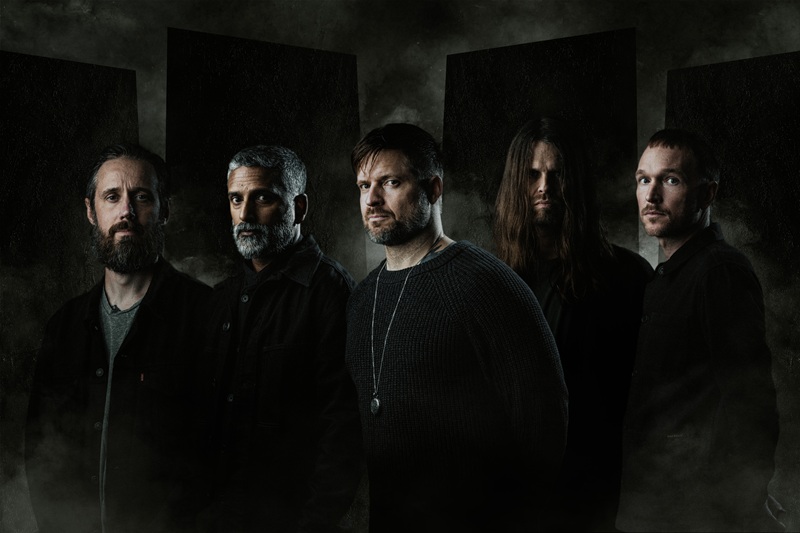
- Johannes Persson – Vocals, guitar
- Fredrik Kihlberg – Guitar, vocals
- Kristian Karlsson – Synthesizers
- Andreas Johansson – Bass
- Thomas Hedlund – Drums
Links: