


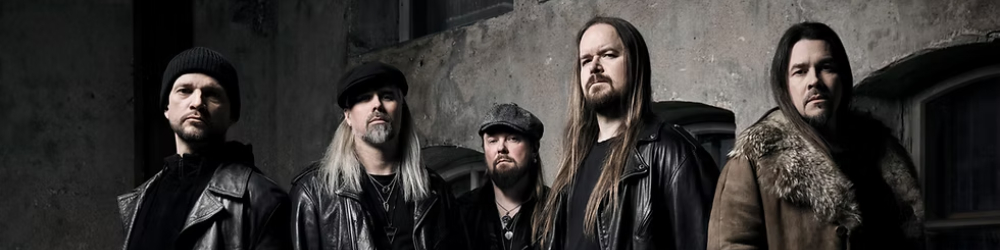

Sometimes there’s a band that manages to stay under your radar for years. You know the band by name—it pops up in all kinds of recommendations on streaming services—but it still remains largely unknown to you, even though it’s right up your alley. The progressive Norwegians of Green Carnation fit that description perfectly for me. With an overwhelming amount of music being released every year, it’s simply a matter of choosing where to spend your limited time. But in this case, I just had to give it a try. The first single, Unconditional Artificial Chemistry, from the new album A Dark Poem, Part III: The Messiah Complex, immediately grabbed my attention with its addictive chorus and left me craving for more. And luckily, there’s more!
Of course, there’s the entire discography—which, despite a hiatus of a decade and a half, offers more than enough to enjoy—but specifically because that first single is part of the A Dark Poem trilogy. The first part, Part I: The Shores of Melancholia, has already been reviewed very favorably here on your favorite website. Unfortunately, there’s no review of the second part, but we can’t view this new third part as a standalone piece, since the trilogy truly forms a cohesive whole. The bigger picture – including Part II: Sanguis – will therefore certainly be taken into account in the review of this new work.
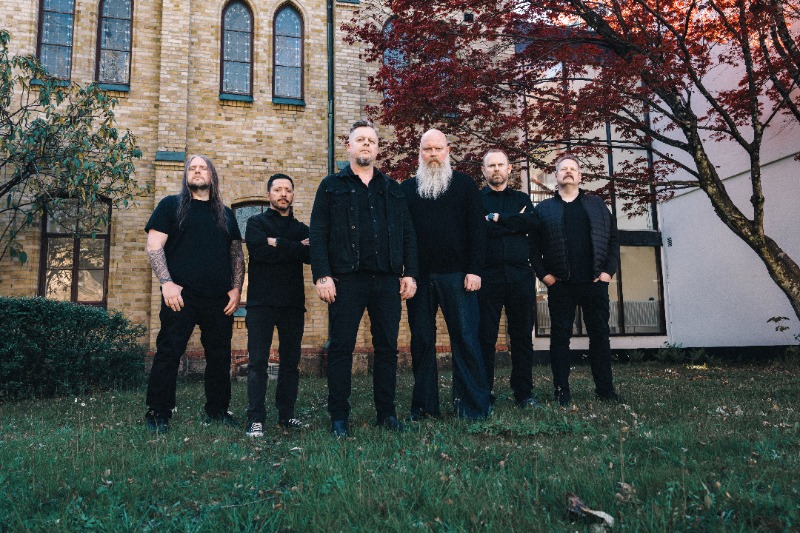
On September 5 of last year, the first part of the trilogy was released, followed by the second part in April of this year. So now, in September, we’re already being treated to the third full-length album in a year (plus one day). Although you could perhaps debate the term “full-length album.” The three parts are presented as full-length albums, but they have a relatively short running time (all just over or under forty minutes). For some genres, that’s no problem at all, but in the progressive rock scene, that’s a bit on the short side. However, if you play all the albums back-to-back, you’ll have nearly two hours of music waiting for you. That’s exactly what I did as preparation for this new album. I recommend you do the same to fully appreciate the grandeur of this achievement. Because what an incredible collection of intriguing, dynamic, and multifaceted music Green Carnation presents with this trilogy. Hats off! It takes a bit of time and attention from the listener, but you’ll undoubtedly be richly rewarded for it. It also adds extra value to the unfolding of this third part, but more on that later.
This third part actually kicks off with Unconditional Artificial Chemistry. The spacey opening is somewhat reminiscent of the bridge leading into the end of the title track from Part I: The Shores of Melancholia. The lingering guitars and Kjetil Nordhus’s warm vocals provide further familiarity and immediately draw you into the music. The subtle keyboard sounds in the background are captivating and add extra layers of atmosphere to the music. The chorus is wonderfully catchy and stays stuck in your head after just one listen. Above all, however, the melancholic tones and soothing vocal lines provide musical comfort and warmth. Simply beautiful! The title track, The Messiah Complex, gets off to a subdued start. The song slowly incorporates heavier guitars and progressive elements. Once again, those spacey sounds pop up here and there. The song is further propelled by urgency in the vocals and driving guitars. You can sense that this is building toward something, but unfortunately, the real climax never quite materializes. Broken Souls, Common Enemies is then an unadulterated prog banger. The song starts off subdued once again and revolves around a seemingly simple melody. This ripples along for a while, but gradually the guitars drive the song further and further forward. Whereas Part I of the trilogy still contained unadulterated black metal (The Slave That You Are), here we’re also treated to a heavy passage filled with frenzied riffs and screams. However, the serenity is quickly restored with an extended musical interlude supported by the flute and light-footed guitar work. The melody from the beginning returns toward the end, along with the musical warmth. All in all, a strong example of progressive metal!
Part III: The Messiah Complex, as described two paragraphs above, provides a strong continuation of the first two parts of the trilogy in its first three tracks. However, those three tracks do lack some of the dynamism that makes Part I and Part II so addictively good. We still have the closing track, A Dark Poem – Orchestral Suite, to look forward to. This time, it’s not a subdued ballad or another dynamic shift, but pure orchestral instrumentation. You read that right: to wrap up this trilogy of progressive metal and warm melodies, we’re treated to a good quarter of an hour of cinematic classical music, making it feel as though we’re in a war drama from the black-and-white film era. A few times, the track seems to end prematurely, but the instruments swell up again. We’re left waiting (or rather, hoping) for an outburst of melancholic guitars and vocals, which would allow for the ultimate symbiosis with the progressive metal from the full hour and a half of the entire trilogy. However, this never materializes. It’s undoubtedly well-crafted, but the whole thing feels somewhat out of place here and lacks a connection to the intriguing guitar music. This results in a strange conclusion to the album—and, by extension, to the trilogy as a whole.
Links: